
The Åland Example and Its Components – Relevance for International Conflict Resolution

Sia Spiliopoulou Åkermark (Editor) ISBN 978-952-5265-60-6 (English 2011) 30,00 euro + porto/postage “The Åland Example and Its Components – Relevance for International Conflict Resolution” was launched on 1 November 2011 in connection with an international conference with over 100 participants, among them several prominent diplomats, politicians and researchers. (Read about the conference here). This publication brings together the results of a research project on the dynamic nature of the Åland example and its significance for international conflict resolution that took place in 2010 and 2011. The research project followed two tracks: continuity and change as characteristic features of the Åland regime. The Åland example as a tool in international conflict resolution on the other. Sia Spilopoulou Åkermark, Sarah Stephan and Heidi Öst have outlined features of both continuity and change in what can be classified as the Åland example’s three components: the autonomy regime and its institutional design, demilitarization and neutralization and the cultural and linguistic guarantees of the minority protection regime. To date, territorial autonomy or self-government as a possible conflict resolution tool has received only limited attention in the conflict resolution literature. By taking the discussion further – beyond the formal aspects of competence distribution between center and […]
ÅIPI Director Appointed Conciliator for OSCE Court
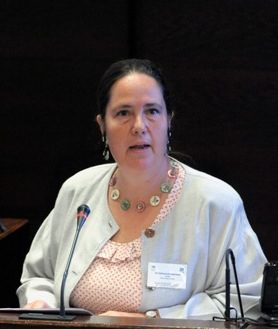
The President of the Republic of Finland has appointed the Director of the Åland Islands Peace Institute, Associate Professor of International Law Sia Spiliopoulou Åkermark, conciliator to the Court of Conciliation and Arbitration within the Organization for Security and Co-operation in Europe (OSCE), upon nomination by the Ministry for Foreign Affairs. Sia Spiliopoulou Åkermark was appointed together with Kimmo Kiljunen (conciliator), Erkki Kourula (arbitrator) and Jan Klabbers (alternate arbitrator) for a term of six years, beginning in 2019. The court works with conciliation and arbitration as working methods for various intergovernmental disputes and provides a mechanism for peaceful settlement of disputes between States. The OSCE conciliation and arbitration proceedings have not yet been activated by any of the 33 States which have signed the Convention, but it remain an option for the peaceful settlement of disputes in Europe. More information about recent appointments to the Court can be found here.